
How Can Christians Prepare to Volunteer in Disaster Crisis Response?
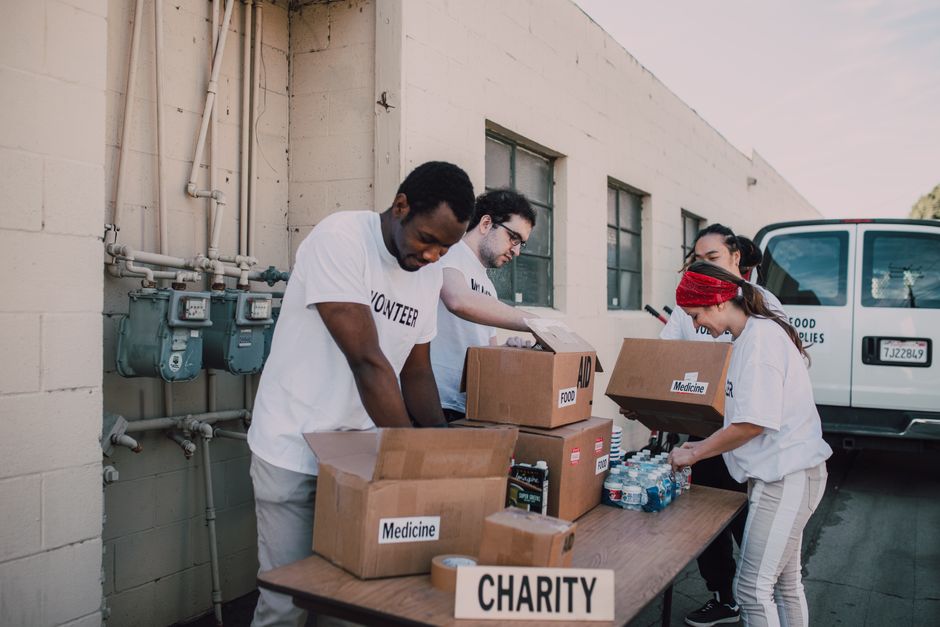
Christians preparing for disaster crisis response need training, screening, clear authority to deploy, trauma-informed boundaries, and a plan for their own care. Start with a sponsoring program rather than a disaster scene. Complete its required courses, accept background and reference checks, learn to listen without imposing belief, and understand the physical, financial, and emotional terms of deployment.
A crisis does not need another uninvited helper. It needs a person who can work inside a chain of command, hear pain without taking control of it, and know when another kind of care is needed.
What training do I need before volunteering as a crisis chaplain?
You need the training required by the program that will sponsor, credential, and deploy you.
Requirements vary because the role varies. A state disaster chaplain may operate within emergency management. A hospital or first-responder chaplain may need agency-specific preparation. A ministry deployment team may pair spiritual-care instruction with critical-incident training and its own deployment orientation.
The Missouri Disaster Chaplaincy Program requires eight courses: ICS 100, ICS 200, ICS 368, ICS 505, ICS 700, ICS 800, Psychological First Aid, and Critical Incident Stress Management. That sequence joins two kinds of knowledge. Incident Command System courses teach how a disaster operation is organized. Psychological First Aid and critical-incident training address the human cost inside that operation.
National VOAD sets the principle plainly: disaster spiritual-care providers need appropriate training, public identification, and credentialing before serving vulnerable survivors. Its guidelines name core skills: recognize crisis reactions, assess needs, select fitting interventions, and refer people to health-care or mental-health professionals when needed.
| Setting | Examples of preparation from the sources | What it shows |
|---|---|---|
| State emergency management | Eight Missouri courses, including six ICS courses, Psychological First Aid, and Critical Incident Stress Management | Disaster work has an operational system as well as a care role. |
| Disaster interfaith program | NYDIS offers a two-day certification of four four-hour modules; prior pastoral or counseling experience and certified ICS training are required | Chaplain certification can require prior formation before disaster-specific instruction begins. |
| Ministry response team | Billy Graham Rapid Response Team uses five training components, including crisis, CISM, and deployment orientation courses | Approval is the beginning of preparation, not the end of it. |
| First-responder agency | Georgia requires agency-operation and critical-incident-support training | Agency chaplaincy depends on learning the agency's rules and command structure. |
Training is not a badge. It sets the edge of the work. A person can offer steady presence, grounding, safety, and emotional support. A person must not act as a clinician without that role or training.
Credential checking is familiar in other high-stakes settings. The same habit of asking who oversees a process appears in How Can Wollongong Patients Join a Clinical Trial Safely?. In disaster care, the question is equally plain: who has authorized this person to serve here?
Can a layperson volunteer as a crisis chaplain, or must I be ordained?
A layperson can volunteer in disaster spiritual care, but the role and entry requirements depend on the sponsoring program.
Ordination is not the only path. NYDIS prepares lay leaders and caregivers as Spiritual Care Workers through a four-hour curriculum for mass-care facilities, evacuation centers, and points of distribution. That is a distinct role from its Disaster Chaplain Certification, which requires prior pastoral or counseling experience and certified ICS training.
The distinction matters. A lay volunteer should not claim the authority, training, or title of a chaplain when a program has assigned a different role. Clear titles protect survivors and teams. They also make referrals cleaner when someone needs pastoral leadership, medical care, behavioral-health support, or emergency services.
Some programs set a higher bar. Georgia's Volunteer Chaplain Program requires official endorsement from a recognized religion, five years of ministry experience, knowledge of local medical and psychiatric resources, and demonstrated maturity, emotional stability, and flexibility. Its volunteers also serve under a chaplaincy coordinator and receive no compensation for the position or duties.
There is no single national doorway. The realistic path is local service under supervision, then the training and screening required for a deployable role. The role comes after the preparation. Not before.
What does a crisis chaplain do at a disaster scene?
A crisis chaplain provides authorized spiritual and emotional support, assesses needs, keeps boundaries, and connects people with the right help.
This work begins with the person in front of you. The Office for Victims of Crime guidance says faith-based responders are first and foremost responders. Support can mean stabilization, grounding, safety, and emotional presence rather than religious speech. The guidance directs responders to listen without judgment and not impose belief on people made vulnerable by trauma.
Respect has practical form. Learn the person's preferred language, their comfort with physical contact, the meaning of religious symbols, worship schedules, and beliefs about health and mental-health care. Children and young people also process traumatic events differently from adults, according to the same federal guidance. Age-appropriate help and referral belong in the response.
Requested spiritual practices can have a place. Prayer, meditation, chanting, reading, gatherings, rituals, and faith-based social support are possible coping resources when requested by the victim. Consent is the line. The Missouri program's standard is sharper still: “Never engage in proselytizing.”
A disaster chaplain also serves the response system. Missouri identifies support for disaster medical and mortuary teams, behavioral-health strike teams, victims and families, disaster workers, and faith-based community partners. The chaplain does not replace any of them. Care is presence. Scope is restraint.
Why do crisis chaplain programs require background checks and references?
Programs require background checks and references because people in crisis need screened, accountable caregivers with verified fitness to serve.
National VOAD advises organizations to screen providers for physical, emotional, and spiritual fitness, document a cleared criminal background check, issue current credentials and identification, and provide a pre-deployment briefing. Missouri coordinates a fingerprint-based criminal background check, requires at least one recommendation letter, and can interview applicants.
These steps are not a test of religious sincerity. They assess whether a person can safely enter a setting marked by grief, confusion, loss, and unequal power. References can speak to maturity and reliability. Interviews can test whether an applicant understands confidentiality, boundaries, referrals, and the ban on tying help to religious belief.
Screening also protects the volunteer. A deployment asks more than goodwill. Billy Graham's team says invitations depend on availability and organizational need. Its deployed chaplains should be able to walk two to three miles a day, live at a camp such as a church or school, and share daily work such as cleaning, cooking, and washing. Room and board are provided, while transportation to and from the site is not paid.
Do not self-deploy. National VOAD says providers should respond only when authorized through their sponsoring organization. Before accepting, Missouri gives volunteers the incident scope, staging location, expected activities, and skills needed. Read that briefing as a boundary, not an obstacle.
After the call, recovery remains part of the assignment. NYDIS includes self-care practices to reduce compassion fatigue and build resilience through support systems. National VOAD calls for supervision, peer support, and stress-management training. The Billy Graham team adds a plain rule: do not deploy while unresolved stressful activities or decisions are active in your own life.
Help has limits. Limits make help safer.
Frequently Asked Questions
How do chaplains support people of other faiths or no faith during a crisis?
They begin with the person's needs, not the chaplain's beliefs. Federal guidance directs faith-based responders to listen without judgment, respect cultural and religious practices, and avoid imposing beliefs on emotionally vulnerable people. Prayer, ritual, meditation, or other spiritual practices are resources when the person requests them, not tools to direct the encounter.
How can a crisis chaplain avoid causing harm or burnout after traumatic calls?
Stay within training, keep professional boundaries, protect confidentiality, and refer needs beyond spiritual care to health or mental-health professionals. National VOAD calls on organizations to provide supervision, peer support, and personal stress-management training. A responder dealing with unresolved stress should not deploy, according to the Billy Graham Rapid Response Team.
Do volunteer crisis chaplains have to pay for travel and deployments?
Terms differ by organization. The Billy Graham Rapid Response Team provides room and board during deployment but does not pay transportation to or from the site, and it generally looks for chaplains within 200 miles of a disaster. NYDIS lists stated fees for its certification and spiritual care worker training, so applicants should ask for the full cost before enrolling.
Sources
- Missouri State Emergency Management Agency: Missouri Disaster Chaplaincy Program
- National VOAD: Disaster Spiritual Care Guidelines
- U.S. Department of Justice Office for Victims of Crime: Faith-Based Responders in the Wake of Mass Violence and Terrorism
- New York Disaster Interfaith Services: Disaster Chaplaincy
- Billy Graham Rapid Response Team: Become a Chaplain
- Georgia Department of Public Safety: Volunteer Chaplain Program Policy 21.04