
Why Does Developing a New Medicine Take Years and Why Do Most Candidates Fail?
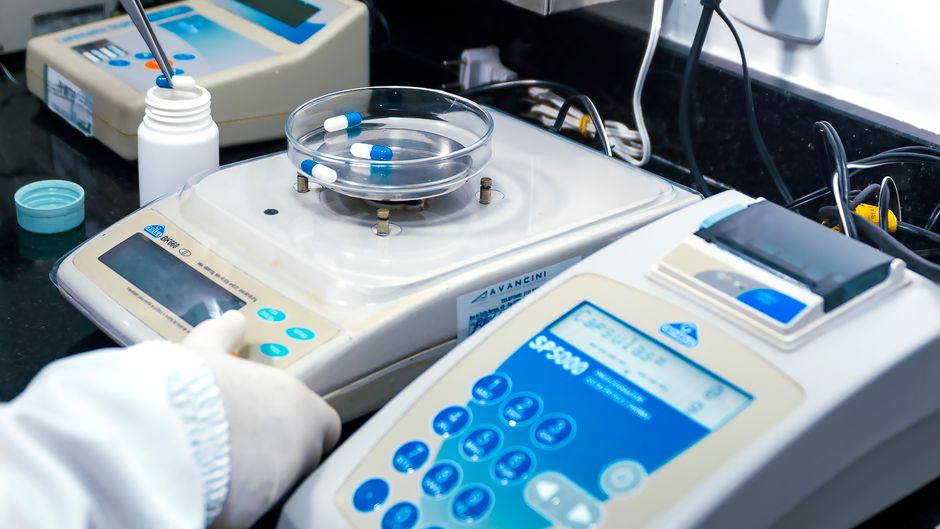
Developing a new medicine takes 10 to 15 years because each candidate must survive discovery, toxicity testing, several human trial phases, and regulatory review. Most fail because early results do not reliably predict what happens in people: the medicine may not work well enough, may cause unacceptable harm, or may not reach the right tissue at a useful dose.
The long path is not one test repeated four times. It is a series of different questions. Each question removes candidates that cannot answer it.
Why does it take 10 to 15 years to develop a new medicine?
It takes 10 to 15 years because researchers must build evidence in stages, and the human trials alone usually take several years. A peer-reviewed review in Acta Pharmaceutica Sinica B reports that discovery and development exceed 10 to 15 years for a new drug.
The clock starts before anyone receives the medicine. Researchers first need a candidate worth studying. They then test it outside people, ask the FDA for permission to begin human studies, run trials through Phases 1, 2, and 3, prepare a full New Drug Application, and wait for review.
Each stage answers a narrower question. Does it cause serious harm? Does the body handle it in a usable way? Does it help patients? Does the benefit hold across a larger group, at the proposed doses? A candidate that fails one answer does not become an approved medicine.
| Stage | Core question | What happens next |
|---|---|---|
| Discovery and preclinical research | Is there a candidate worth testing, and does it show toxicity? | Researchers decide whether human testing is justified. |
| Clinical Phases 1 to 3 | Is it tolerated, does it work, and is its benefit supported across more people? | Evidence is gathered for a marketing application. |
| FDA review | Does the full record support safe and effective use for the studied population? | FDA approves, requests more work, or does not approve. |
| Phase 4 | What does ongoing safety monitoring show after approval? | New safety information can shape later use. |
The final review has its own weight. According to the FDA's drug-review guidance, an application includes the record from preclinical work through Phase 3, analyses, safety updates, proposed labeling, patent information, and manufacturing information. FDA medical officers, statisticians, and pharmacologists review that record, and inspectors examine trial sites for signs of fabricated, manipulated, or withheld data.
After FDA accepts a complete application, its decision window is 6 to 10 months. That is shorter than the trial years that came before it. Review is the gate. Evidence is the road.
What happens before a medicine is tested in people?
Before a medicine is tested in people, researchers study whether it could cause serious harm and collect the dose and toxicity information needed to judge whether a human trial is justified. This is preclinical research.
The FDA describes two broad forms of this work: in vitro studies and in vivo studies. The first examines a candidate outside a living organism. The second examines it in a living organism. Neither is a substitute for a human trial. Both are part of the evidence needed before one begins.
Preclinical work is governed by requirements for how studies are run, recorded, and checked. The FDA explains that good laboratory practice requirements cover personnel, facilities, equipment, written protocols, reports, and quality-assurance oversight.
Then comes the Investigational New Drug application, or IND. A sponsor submits preclinical animal-test results and a proposed plan for testing in people. FDA decides whether it is reasonably safe to proceed.
This explains a hard truth about early headlines. A result in a dish or an animal model is a reason to ask the next question. It is not an answer about patients. The 2022 review notes that a candidate can work in cell or animal models yet fail in people because human biology, the true disease target, tissue exposure, dose, and toxicity differ from those models.
What is the difference between Phase 1, 2, 3, and 4 clinical trials?
The phases differ because each tests a different part of the case for a medicine, from early safety to larger evidence of benefit and ongoing safety monitoring after approval. The number of participants grows as the question grows.
| Phase | Typical participants | Main work |
|---|---|---|
| Phase 1 | 20 to 80 people | Find common side effects and study how the body metabolizes and excretes the drug. |
| Phase 2 | A few dozen to about 300 patients | Gather preliminary effectiveness data while continuing safety assessment. |
| Phase 3 | Several hundred to about 3,000 people | Assess safety and effectiveness across populations and doses. |
| Phase 4 | People using an approved medicine | Continue safety monitoring after approval. |
The FDA's overview of the drug-review process gives the typical enrollment ranges for the first three phases. Larger trials do not exist to make the process look more serious. They test whether an earlier result holds when more patients, doses, and circumstances enter the picture.
Failure is common at this point. The Acta Pharmaceutica Sinica B review reports that about 9 in 10 candidates entering clinical studies fail in Phase 1, 2, or 3, or during approval. Across 2010 to 2017 clinical-trial data examined in that review, lack of clinical efficacy accounted for 40% to 50% of failures, unmanageable toxicity for 30%, poor drug-like properties for 10% to 15%, and commercial or strategic factors for 10%.
A drug is not judged by its promise. It is judged by its record.
COVID-19 vaccines show why a shorter timeline does not mean a thinner process. NIAID reports that less than three months after SARS-CoV-2 was identified, it began the Phase 1 trial of mRNA-1273 using established trial infrastructure. Years of research on SARS, MERS, related viruses, and vaccine technologies came first, including a four-year NIH-Moderna collaboration on mRNA vaccines for emerging infections.
The safety and efficacy steps remained. Work that often happens one after another happened at the same time: manufacturing began while trials were underway, and existing trial networks combined to enroll thousands of volunteers. Speed came from prior knowledge, funding, infrastructure, and parallel work.
Artificial intelligence changes an earlier part of this path, not the need for the path. A 2024 Drug Discovery Today analysis found 80% to 90% Phase 1 success among AI-discovered molecules in its sample. Its Phase 2 success rate was about 40%, comparable to historical industry averages, and the authors noted the limited sample size. A better starting point still faces the test that matters: results in people.
Frequently Asked Questions
Why do so many promising drugs fail in clinical trials?
A candidate can look strong in cells or animal models and still fail in people. The 2022 review in Acta Pharmaceutica Sinica B attributes 40% to 50% of failures to lack of clinical efficacy and 30% to unmanageable toxicity. Human biology, the true disease target, tissue exposure, dose, and toxicity can differ from preclinical models.
Why can vaccines sometimes be developed faster than other medicines?
COVID-19 vaccine work moved quickly because researchers built on years of research into SARS, MERS, related viruses, and vaccine technologies. NIAID reports that the accelerated timeline kept traditional safety and efficacy steps while activities such as manufacturing and clinical trials ran at the same time.
Does artificial intelligence make drug discovery faster?
AI can help identify or design molecules with drug-like properties earlier in discovery. A 2024 Drug Discovery Today analysis reported 80% to 90% Phase 1 success for AI-discovered molecules, while Phase 2 success was about 40%, comparable to historical industry averages on a limited sample. AI does not remove the later clinical tests that show whether a medicine works safely in people.
Sources
- U.S. Food and Drug Administration: FDA's Drug Review Process
- U.S. Food and Drug Administration: Step 2, Preclinical Research
- U.S. Food and Drug Administration: Step 4, FDA Drug Review
- Acta Pharmaceutica Sinica B: Drug development and clinical translation review
- National Institute of Allergy and Infectious Diseases: Coronavirus Vaccines and Prevention
- Drug Discovery Today: AI-discovered molecules in clinical development