
How Do I Quiet a Noisy Garage Door?
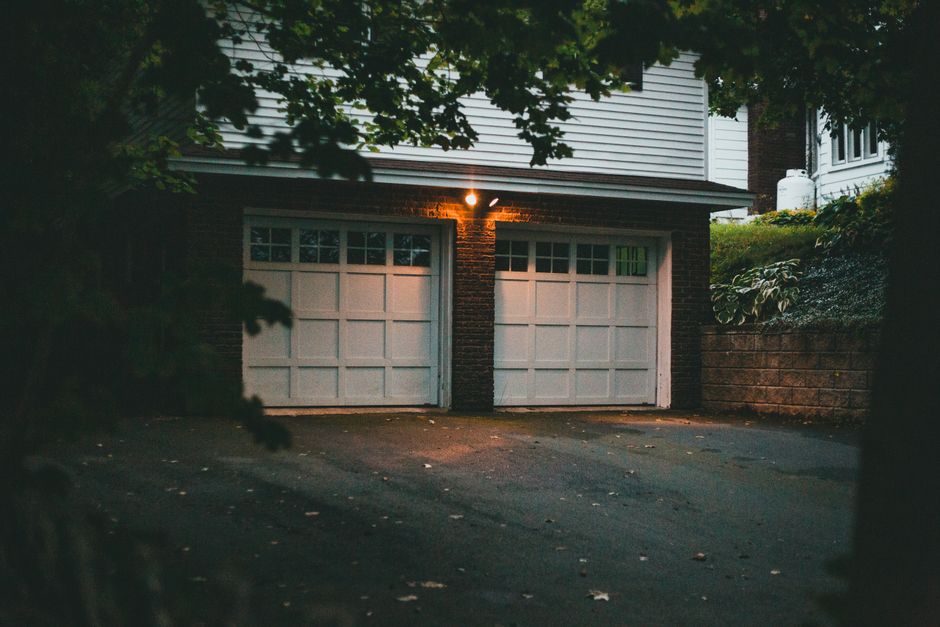
To quiet a noisy garage door, use the lubricant specified in your door’s manual and apply it sparingly to approved moving parts such as hinge pins, metal roller bearings, springs, and bearing plates. Keep tracks clean and dry unless your manufacturer says otherwise, and avoid lubricating nylon rollers or plastic parts. If noise persists, parts are worn, or the door feels heavy, contact a qualified technician.
What lubricant should I use on my garage door?
Use the product your garage-door manufacturer recommends; silicone-based spray and white lithium grease are common options, but they are not interchangeable instructions for every model. Clopay recommends silicone-based lubricant or white lithium grease for compatible components and warns that oil-based products can attract dirt and dust.
Manufacturer advice differs on both product and placement. Raynor recommends silicone- or Teflon-based spray for its doors, while CEDO recommends silicone-based lubricant for several components and white grease for torsion springs. Treat the door’s manual as the deciding reference: it identifies the parts and products suitable for your specific model.
| Product or approach | What the sources say | Practical decision |
|---|---|---|
| Silicone-based spray | Recommended by Clopay for appropriate components; Raynor recommends silicone- or Teflon-based spray for its doors. | Use where your manual permits it, and apply only to compatible parts. |
| White lithium grease or white grease | Clopay recommends white lithium grease; CEDO recommends white grease for torsion springs. | Use only on parts and models for which the manufacturer specifies grease. |
| Oil-based products and WD-40-type products | Clopay warns oil-based products can attract dirt; Raynor and CEDO advise against WD-40-type products for their maintenance guidance. | Do not assume a general-purpose product is suitable. Check the manual first. |
Before applying anything, clean off dirt where appropriate and wipe away excess lubricant. A thin, targeted application is easier to manage than coating parts indiscriminately: extra product can collect debris, and lubricant on the wrong surface can interfere with how the door moves.
Can I use WD-40 on garage door rollers and hinges?
Do not use WD-40 as a default garage-door lubricant; check your model’s instructions and choose an approved product instead. Raynor advises against WD-40-type oil-based lubricant and grease for its doors, and CEDO says WD-40 and similar products are not recommended because they might remove grease from springs.
Roller material matters as much as the product. Clopay says not to lubricate nylon rollers, and Genie says not to lubricate nylon roller bearings or plastic hinges. Ideal Door also advises against lubricating nylon roller surfaces and plastic parts. If your rollers have metal bearings, confirm that your manual permits lubrication and target the bearing rather than coating the roller surface.
That distinction prevents a common maintenance misstep: applying lubricant to every visible part because it moves. Some plastic and nylon components are meant to stay unlubricated. Read the manual, identify the component, then apply only the recommended product to the approved point.
Which parts of a garage door should I lubricate?
Lubricate only the moving parts approved by your door’s manufacturer—often hinge pins, suitable roller bearings, springs, and bearing plates. Clean the tracks, but do not lubricate them unless your manufacturer specifically directs you to.
Clopay recommends cleaning tracks with a damp cloth and says lubricant there can make rollers harder to move, forcing the opener to work harder. Raynor, however, recommends lubricating the track and hinges on its doors with silicone- or Teflon-based spray every six months, then opening and closing the door to distribute it. These instructions conflict, so the safe choice is model-specific guidance, not a universal track rule.
“Don’t add lubrication to the actual tracks. That just makes it harder for the rollers to move, forcing the opener to work harder.”
To keep routine maintenance controlled, use this sequence:
- Check the manual. Confirm which lubricant and components are approved for your door and opener.
- Inspect before applying. Look for dirt, visible wear, damage, or loose hardware. Genie recommends checking rollers for worn bearings, cracks, chips, and warping, and checking tracks for damage, rust, bending, or loose bolts.
- Clean and target. Wipe tracks clean as directed by your manufacturer. Apply lubricant only to approved points, such as hinge pins or suitable bearings, and wipe away excess.
- Test the door. Operate it and listen for changes. Raynor recommends opening and closing the door after its prescribed track-and-hinge lubrication to distribute the spray.
- Escalate unsafe problems. Genie warns that springs and related parts are under extreme tension. Do not adjust torsion springs or marked service-only fasteners; contact an authorized dealer or qualified technician if a spring or other high-tension part appears faulty.
Schedules also vary by manufacturer. Raynor recommends lubrication every six months, while Amarr recommends a routine maintenance check twice a year. Genie says rollers may need replacement every five to seven years; inspect for wear rather than treating that interval as a guarantee. CEDO recommends lubricating weatherstrips three times a year or more often depending on use, and cautions that petroleum-based products can harden rubber. Follow the schedule and product guidance for your own model.
If the door still makes noise after appropriate lubrication, check whether the source is actually a worn component or the opener. Ideal Door suggests disconnecting the opener and operating the door manually: if the noise stops, the opener is a likely source; if it continues, investigate the door. Loose nuts and bolts can also cause noise, but retighten carefully without overtightening. If the door feels heavy to lift, or you suspect a spring problem, stop and contact a dealer or trained technician.
Frequently Asked Questions
Should I put lubricant on the garage door tracks?
Check your door manufacturer’s instructions because recommendations differ. Clopay says to clean tracks with a damp cloth and leave them unlubricated, while Raynor recommends silicone- or Teflon-based spray on its doors’ tracks. Follow your model’s manual rather than treating every track the same.
How often should I lubricate a garage door?
Use the schedule in your door’s manual. Raynor recommends lubricating certain components every six months, and Amarr recommends a routine maintenance check twice a year. These schedules are manufacturer guidance, not a universal rule for every door.
Why is my garage door still squeaking after I lubricated it?
The noise may come from a worn roller or hinge, loose hardware, or the opener rather than from a dry moving part. Ideal Door suggests disconnecting the opener and operating the door manually to help distinguish opener noise from door noise. If a spring or other high-tension part may be involved, contact a trained technician.
For the next maintenance check, start with the manual, inspect the rollers and hardware, and apply only the lubricant specified for approved parts. If the door remains noisy or feels heavy, make the next step a professional inspection—not more lubricant.
Sources
Read next

How Do I Identify and Treat Mites in My Home Safely?
Identify bird mites, dust mites, bed bugs, and fleas, then use targeted cleaning and safe pest-control steps.

How Do You Plan a Modern Commercial Restroom for a Small Business?
Plan a small-business restroom with accessible clearances, practical touchless fixtures, durable wet-use finishes, and a cleaning routine staff can sustain.

How Do I Make a Durable, Easy-to-Read DIY House-Number Sign?
Build a legible outdoor house-number sign with durable materials, a weather-ready finish, and mounting suited to brick, stucco, or vinyl siding.

How Do I Prepare My Site for a Delivered-and-Installed Carport?
Prepare permits, access, drainage, utilities, surfaces, anchors, and crew clearance before a delivered carport installation.