
What Do Chaplain Credentials Mean?
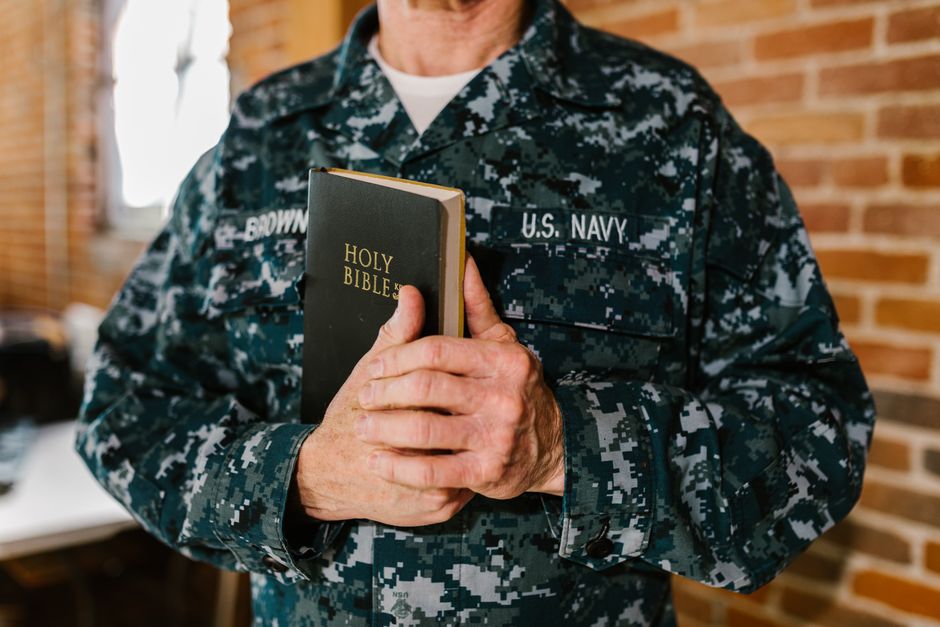
Chaplain credentials are not one thing. Training shows that you completed a course; certification shows that a professional body assessed your education, clinical formation, experience, and skills; ordination or recognition comes from a faith tradition; and endorsement authorizes ministry on that tradition’s behalf. A licence can be an employer or jurisdiction-specific requirement, not a substitute for those separate credentials.
What is the difference between chaplain training, certification, licensing, and ordination?
The difference is the issuer and the claim. A school or training provider issues a course certificate. A faith body ordains a minister, or recognizes ministerial standing in traditions that do not ordain. A professional board certifies competence. An employer or public authority sets hiring conditions.
Federal standards show why the labels cannot be swapped. The Department of Veterans Affairs requires a qualifying graduate theological degree and current ecclesiastical endorsement for chaplain employment. For GS-11 and higher, it also requires Board Certified Chaplain status through BCCI or a reciprocal U.S. body. One document does not do the work of the others.
Board certification is the deepest professional review in this group. The Board of Chaplaincy Certification Inc. requires 72 graduate semester hours, four CPE units, 2,000 documented hours of qualifying chaplain work after CPE, current endorsement or recognition, written work, and an interview for its Board Certified Chaplain credential. A peer committee assesses 29 chaplaincy skills before the certification process reaches board ratification.
Licensing is different again. The federal standards in these sources name education, endorsement, experience, clinical pastoral education, and certification. They do not present a general chaplain licence as the common credential that replaces them. Ask the hiring agency what it means by “licensed,” who issues it, and whether it is required for the job you seek.
| Credential or requirement | Who provides it | What it establishes |
|---|---|---|
| Training certificate | Course or education provider | Completion of that provider’s program |
| Ordination or religious recognition | Faith tradition | Ministerial standing under that tradition’s rules |
| Ecclesiastical endorsement | Authorized faith-group endorser | Good standing and fitness to provide ministry in a pluralistic setting |
| Board certification | Professional certifying body | Peer-reviewed professional competence against defined standards |
| Employer screening | Hiring agency | Suitability for a particular post |
Names are easy. Standards are hard. That is the point of the distinction.
Does a chaplain certificate let me work in a hospital, prison, or military setting?
No. A chaplain certificate by itself does not establish eligibility for hospital, prison, or military employment under the standards described by the relevant agencies and professional bodies.
Hospitals often expect the most clinical pathway. The Association for Clinical Pastoral Education states that hospitals commonly employ only board-certified chaplains, a process requiring 1,600 hours of CPE. ACPE describes that formation as a four-unit residency or a three-unit residency after a 400-hour prerequisite unit. A short course can teach useful material. It does not equal supervised clinical formation.
That distinction matters in settings where people face illness, grief, moral distress, and hard medical choices. For a related guide to asking sound questions in a healthcare setting, see How Can Wollongong Patients Join a Clinical Trial Safely?.
Federal prison work has a defined gate. The Federal Bureau of Prisons requires a bachelor’s degree plus a Master of Divinity or equivalent graduate theological education totaling at least 72 semester hours. Those hours include 20 in pastoral ministry, 20 in theology, ethics, or philosophy of religion, 20 in sacred writings, and 12 in religious history or world religions. Applicants also need 4,160 hours of pastoral or spiritual leadership experience; four CPE units can satisfy up to one year of that requirement.
Military appointment has its own rule set. The Department of Defense requires endorsement from a qualified religious-endorsing organization, documented on DD Form 2088. Active-component applicants need two years of ministry experience relevant to military chaplaincy, a bachelor’s degree with at least 120 semester hours, and a qualifying graduate theological or related degree requiring at least 72 semester hours.
The useful question is not, “Is this certificate real?” The useful question is, “Does this certificate satisfy the written standard for the role?”
Do I need to be an ordained minister to become a Christian chaplain?
Often yes for roles that require ordination, but not every tradition uses ordination and not every chaplain role follows the same rule.
The Bureau of Prisons says applicants ordinarily must be ordained clergy. It also recognizes that some faith traditions do not ordain. In those cases, the applicant can document recognized religious and ministerial roles instead. That is not a loophole. It is a way to assess standing without forcing one tradition’s structure onto another.
Endorsement remains separate. The VA defines it as a written statement that an applicant is in good standing and qualified to perform the full range of ministry in a pluralistic setting. Its qualification standard states that “Ecclesiastical endorsement is a condition of employment as a VA chaplain.” The BOP likewise requires endorsement before employment and requires chaplains to keep it during their tenure; the applicant must have at least a two-year relationship with the endorsing organization.
Before enrolling, ask a prospective employer or host agency for its written requirements. Ask whether it accepts your faith group’s endorsement, whether it requires ordination or recognized standing, which CPE providers it recognizes, whether board certification is required at hiring, and whether supervised or volunteer work counts. Then compare the answers with the training provider’s promises.
For prison employment, screening reaches beyond credentials. The Bureau of Prisons hiring process says its background investigation includes law-enforcement and criminal-record checks, credit checks, and inquiries with previous employers and personal references. The certificate is one paper in a larger file.
Frequently Asked Questions
What does ecclesiastical endorsement mean for chaplains?
Ecclesiastical endorsement is a written statement from a faith group’s authorized endorsing body that the chaplain is in good standing and qualified for ministry in a pluralistic setting. The VA, Bureau of Prisons, and Department of Defense each treat it as a distinct employment condition, not as a training certificate or board-certification credential.
Are online chaplain credentials accepted by employers and public agencies?
Acceptance depends on the employer’s stated standard and the organization behind the credential. The federal and professional standards cited here require defined graduate education, recognized CPE, endorsement, experience, or peer-reviewed certification; a course completion document does not establish that it meets those requirements.
What background checks, references, and continuing education are commonly required?
For Bureau of Prisons employment, the background investigation includes law-enforcement and criminal-record checks, credit checks, and inquiries with former employers and personal references. Credential maintenance also matters: BCCI requires current or recently reaffirmed faith-group endorsement, while BOP chaplains must maintain endorsement throughout their employment.
A title is not a qualification. A qualification is proof that the right body has tested the right thing for the right setting.
Sources
- U.S. Department of Veterans Affairs, Chaplain Qualification Standard GS-0060
- U.S. Department of Justice, Federal Bureau of Prisons, Chaplains’ Employment, Responsibilities, and Endorsements
- U.S. Department of Justice, Federal Bureau of Prisons, Hiring Process
- Board of Chaplaincy Certification Inc. and Association of Professional Chaplains, Requirements and Definitions
- U.S. Department of Defense, DoD Instruction 1304.28
- Association for Clinical Pastoral Education, Medicare Pass-Through