
Are There Any Free Accredited Chaplaincy Programs Available Online?

Are there any free accredited chaplaincy programs available online? Free online chaplain training exists, but tuition-free coursework is not the same as an accredited degree or supervised Clinical Pastoral Education (CPE). Professional hospital pathways can require graduate education, CPE units, endorsement, and experience, so check each employer or certification board’s rules before choosing a program.
Is there a way to get a free chaplain degree online?
Free online chaplain courses are available, but the sources reviewed do not establish that a tuition-free course awards an accredited graduate degree. The distinction matters: a course certificate records training, while a degree is academic credit awarded by an institution. Neither label alone tells you whether a hospital or certification board will accept the credential.
The Council for Higher Education Accreditation (CHEA) distinguishes institutional accreditation from programmatic accreditation. Its database includes information on more than 8,200 institutions and 44,000 programs accredited by recognized U.S. accrediting organizations, according to CHEA. Use the database to identify an institution’s accreditor, then ask the employer or board whether that particular degree qualifies.
For a concrete benchmark, the Board of Chaplaincy Certification Inc. (BCCI) requires at least 72 graduate semester hours for Board Certified Chaplain applicants, including a qualifying master’s degree with at least 30 semester hours in theology, philosophy, or psychology. The Associate Certified Chaplain pathway requires 48 graduate semester hours. BCCI also describes a limited graduate-education equivalency option for some board applicants with at least 48 graduate semester hours who meet subject requirements.
These thresholds are not a universal definition of a chaplain degree. They are requirements for specific BCCI credentials. Read What Do Chaplain Credentials Mean? for a closer look at how credential names differ.
Can I become a chaplain for free?
You can begin chaplain training without paying tuition if you find a genuinely tuition-free program, but becoming a working or professionally certified chaplain can involve costs beyond coursework. CPE centers set their own schedules, fees, interview dates, and admission requirements; ACPE advises prospective students to contact each center directly to confirm them.
CPE is not simply online study. The Association for Clinical Pastoral Education (ACPE) describes it as supervised, interfaith professional education involving ministry with people in crisis, detailed reporting, peer learning, educator feedback, pastoral supervision, and theological reflection. A course that lacks supervised practice does not become CPE because it is free or offered online.
The pathway also carries time commitments. ACPE says a CPE unit is usually offered over 10–12 weeks, and a year-long program commonly consists of three to four consecutive units. Part-time options exist, but applicants should confirm the actual schedule and fees with the center. The number of units needed varies by certification organization, ACPE says.
So the practical budget is larger than tuition alone: check course or application charges, degree credits still required, and the costs and time attached to clinical education. Ask the program what is included and ask the credentialing body what it will count.
Can you become a certified chaplain without a degree?
Some chaplain roles or forms of ministry may not require a degree, but the BCCI certification pathways described here do require graduate semester hours. Associate Certified Chaplain applicants need 48 graduate semester hours and two accepted CPE units; Board Certified Chaplain applicants need at least 72 graduate semester hours and four accepted CPE units.
Both BCCI pathways also require faith-group endorsement or recognition. Board Certified Chaplain applicants must additionally document at least 2,000 hours of chaplain work or volunteer experience after completing the required CPE units, according to BCCI. Certain Buddhist and Indigenous traditions may be considered through mentored-education guidelines.
Employer rules can add their own conditions. Mayo Clinic’s listed chaplain position specifies a master’s theological degree from a CHEA-accredited seminary and at least four CPE units from an ACPE-approved center. It notes that an ACPE resident with three completed units may complete the fourth within one year of hire; the listing also prefers one to two years of healthcare experience and requires faith-community endorsement within one year of hire.
These examples show why “certified” needs a named issuer. A course certificate, an employer’s job qualification, and board certification describe different things. Compare the credential’s exact requirements with Are Accredited Chaplaincy Programs Right for Me? before treating one as a substitute for another.
How long does it take to become a certified chaplain?
There is no single timeline: it depends on the degree credits, CPE units, endorsement, and experience required by the target credential or employer. ACPE’s usual unit length is 10–12 weeks, while a year-long CPE program commonly includes three to four consecutive units. Degree completion and any required work or volunteer experience add time beyond the CPE schedule.
The pathways have different thresholds. BCCI requires four accepted CPE units for board certification and two for associate certification. Its board pathway also includes a 2,000-hour post-CPE experience requirement. ACPE advises aspiring chaplains to ask certification organizations directly how much CPE they require, rather than assuming one program’s schedule applies everywhere.
| Path or credential | Published requirement | What to verify |
|---|---|---|
| Tuition-free introductory training | Depends on the provider; the provided sources do not establish a standard degree or CPE award. | Whether the course grants academic credit or supervised CPE accepted by your target organization. |
| BCCI Associate Certified Chaplain | 48 graduate semester hours, two accepted CPE units, and faith-group endorsement or recognition. | Whether your credits and CPE units meet BCCI rules. |
| BCCI Board Certified Chaplain | At least 72 graduate semester hours, including qualifying master’s study; four accepted CPE units; endorsement; and at least 2,000 post-CPE chaplain work or volunteer hours. | Subject-area credits, accepted CPE, endorsement, and documented experience. |
| Mayo Clinic listed chaplain role | CHEA-accredited theological master’s degree and at least four ACPE-approved CPE units, with a stated exception for residents completing a fourth unit after hire. | Current job posting requirements and any role-specific conditions. |
A practical verification sequence
- Choose the intended role or credential first, then obtain its current written requirements.
- Identify the institution’s accreditor and check it in CHEA’s database; ask the employer or board whether it accepts that institution and degree.
- Ask whether the program includes supervised clinical practice and whether the CPE center is approved by the organization you are targeting.
- Confirm fees, admissions, schedule, required endorsement, and any experience threshold directly with the program and credentialing body.
This sequence separates three questions that are easy to confuse: whether training is free, whether an academic institution is accredited, and whether the resulting education qualifies for the intended job or certification. How Do I Choose a Chaplaincy Program? covers the broader selection process.
Frequently Asked Questions
Does tuition-free chaplain training count toward hospital chaplain requirements?
Tuition-free training counts only if the hospital or applicable certification organization accepts the specific credential or coursework. Mayo Clinic’s listed chaplain role specifies a CHEA-accredited master’s theological degree and CPE from an ACPE-approved center, so free online coursework alone does not establish that those requirements are met.
What is the difference between a free chaplain certificate, an accredited degree, and CPE?
A free certificate documents completion of a course or training program; it does not by itself establish an accredited graduate degree or supervised clinical education. An accredited degree is academic education from an institution with recognized accreditation, while CPE is supervised ministry practice with feedback, evaluation, and theological reflection.
How can I check whether a chaplaincy program’s accreditation will be accepted by an employer or certification board?
Look up the institution and its accreditor in the CHEA database, then ask the intended employer or certification board whether it accepts that institution, degree, or program. Confirm separately whether required CPE units and clinical hours are included, since institutional accreditation does not guarantee employer or board acceptance.
Are free online chaplain programs suitable for hospital chaplaincy?
They can provide introductory learning, but free online coursework alone does not meet every hospital role’s stated requirements. Mayo Clinic’s listing specifies a CHEA-accredited theological master’s degree and CPE from an ACPE-approved center, along with additional role-specific conditions.
Sources
Read next
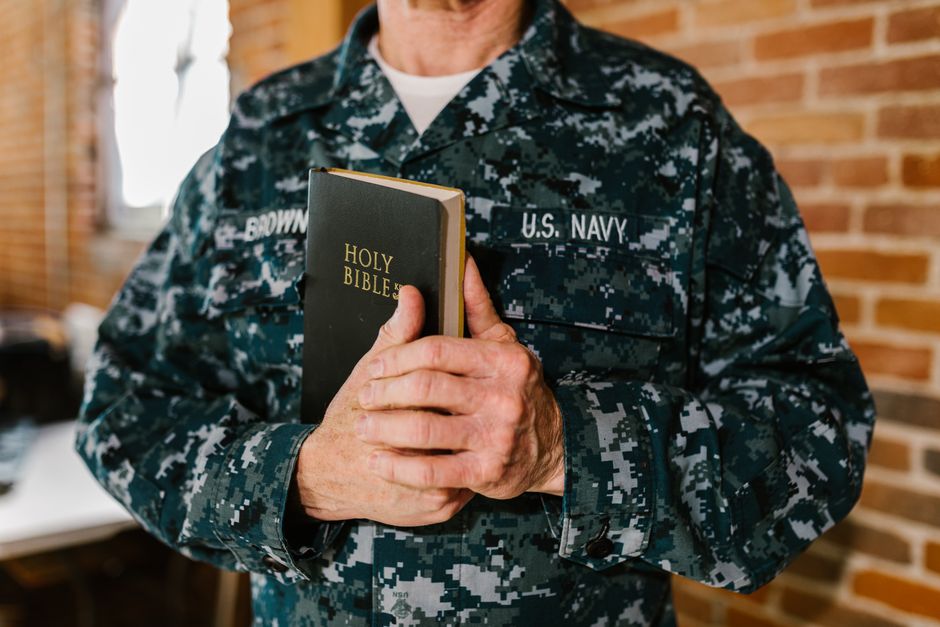
Are Accredited Chaplaincy Programs Right for Me?
Accredited chaplaincy programs differ: verify degree accreditation, approved CPE, and your certifying body's education and experience requirements.
How Do I Choose a Chaplaincy Program?
Choose a chaplaincy program by matching its training, clinical work, and credential outcomes to the setting and role you want.
How Do I Choose a Free Online Bible Course for Ministry Study?
Compare free Bible courses by theology, workload, certificate terms, accreditation, and the path to college credit.

Choose Outdoor Chairs That Match Your Climate and Storage Plan
Compare resin, aluminum, and powder-coated steel outdoor chairs by climate, storage needs, maintenance, and sale-shopping checks.