
Should I Order Boxed Lunches or a Buffet for 50 People?
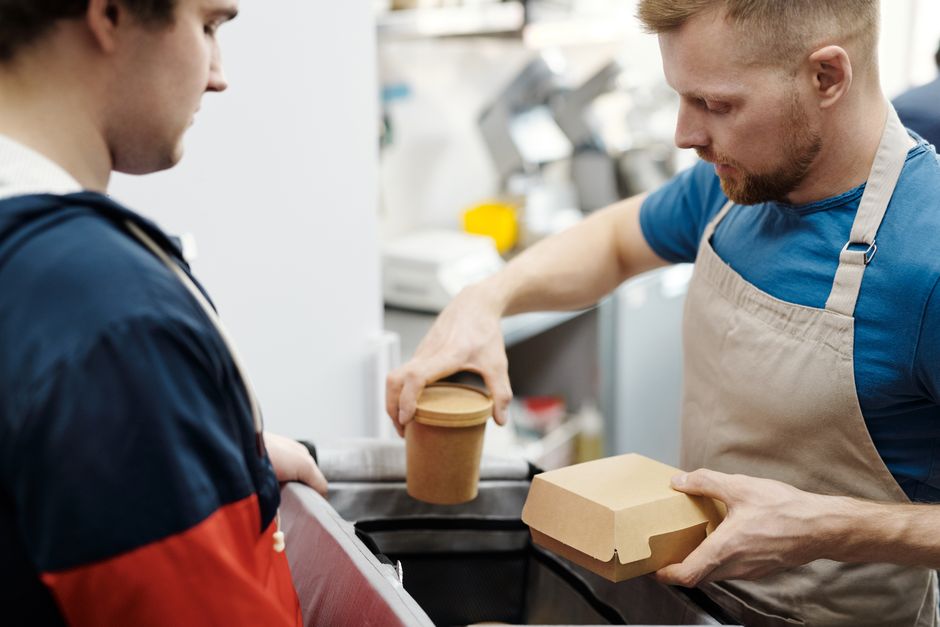
For a 50-person office or event lunch, choose boxed lunches when a short schedule, varied dietary needs, and predictable portions matter most; choose a buffet when the group has time to queue and you can manage portions, temperatures, and leftovers. Get current quotes for both, then decide from attendance, menu choices, and service constraints rather than a presumed per-person bargain.
Should I order boxed lunches or a buffet for an office lunch?
Order boxed lunches when the lunch break has a hard stop or when individual dietary identification is the priority. Order a buffet when guests have room to choose components and the event can tolerate a service line. The format is not the meal plan; it is the service plan.
For a short office lunch, reduce the number of decisions at the table. Confirm each guest's meal before the event, ask the caterer to label it, and set the meals at assigned seats or in an alphabetized pickup area. That turns lunch distribution into a handoff, not a crowd-management exercise.
A buffet earns its place at a training day or casual social event when the schedule has slack and the venue can hold food properly. The U.S. Department of Agriculture says hot food should stay above 140 degrees F and cold food below 40 degrees F. Food outside those controls should not sit at room temperature for more than 2 hours, or 1 hour when the temperature is above 90 degrees F. Ask the caterer, in writing, when food will be served, how long it will sit, how temperatures will be monitored, and how it will be transported.
| Event condition | Better default | Operational move |
|---|---|---|
| Brief lunch between meetings | Boxed lunches | Collect meal choices in advance and distribute by name or seat. |
| Training day with a flexible meal break | Boxed lunches or a buffet | Use boxes for an exact restart time; use a buffet only if the line fits the agenda. |
| Casual social event with menu exploration | Buffet | Refresh in smaller batches and make portion sizes clear. |
| Several allergy-related meals | Boxed lunches | Label each meal and confirm the caterer's cross-contact controls. |
Use the three-question check before approving the order: “Where will people eat?”, “How many minutes do they have?”, and “Which meals require an identified recipient?” If the answers are seats, few minutes, and several special meals, boxes are the clean call. If the answers are open space, flexible timing, and broad menu choice, a buffet can work.
Dietary accommodation is not a note in the margins. The USDA advises providing the caterer with allergy lists and dietary preferences before the event. The CDC recommends separate equipment and preparation areas for allergen-free meals when feasible; otherwise, surfaces and equipment should be thoroughly cleaned and sanitized. Ask for ingredient information and a specific serving plan, not a vague assurance that a meal is “special.”
Is a buffet or boxed lunch cheaper for 50 people?
Neither format is automatically cheaper for 50 people because public data does not compare local boxed-lunch and buffet quotes. Compare complete quotes for the same menu standard, then include delivery, beverages, disposables, service staff, equipment, and minimum-order terms before choosing.
The cost trap is comparing a visible per-person number while ignoring the rest of the order. Build one quote sheet with identical columns for both formats. The Bureau of Labor Statistics reported that U.S. food-away-from-home prices rose 4.1% from December 2024 to December 2025, which is a useful reason to request current, all-in quotes rather than rely on an old catering budget.
| Quote item | Boxed-lunch question | Buffet question |
|---|---|---|
| Food | What is included in each named meal? | What quantity is prepared for the confirmed count? |
| Service | Is delivery and setup included? | Are attendants, chafers, or other equipment included? |
| Dietary meals | Is each alternative labeled and individually packed? | How are allergen-sensitive meals separated and served? |
| Waste exposure | Which items are routinely left unclaimed? | How will portions and replenishment be controlled? |
Waste belongs in the cost conversation. EPA estimates that U.S. food-service operations discard 4% to 10% of food purchased before it reaches the plate. A University of Vermont audit of 15 catered events found that 61% of catered food was consumed by the client, while 17% was composted, 13% was reused by the catering kitchen, and 9% was eaten by catering staff. Those figures are not a prediction for your event. They are a warning against treating over-ordering as harmless hospitality.
For a buffet, use smaller serving scoops and replenish in smaller batches. EPA specifically recommends smaller plates, bowls, and serving scoops to discourage over-plating. For boxes, track unclaimed meals by menu choice. That is your next-order data, not an embarrassment.
How many extra boxed lunches should I order for a group event?
Order only confirmed boxed lunches plus a deliberate contingency approved by your caterer and budget owner; the provided sources do not establish a universal number of extra lunches for a 50-person event. Keep the contingency visible, identify who may use it, and use attendance records to adjust the next order.
A fixed “extra lunch” rule sounds efficient until it produces a stack of unclaimed meals. Start with a final RSVP list, then separate three groups: confirmed attendees, unresolved attendees, and dietary meals. Confirm whether unresolved guests are attending before increasing the food order.
- Set the count: send a deadline and record yes, no, or unresolved.
- Lock dietary details: send the caterer the names, allergies, and vegan, vegetarian, or gluten-free preferences before production.
- Choose the contingency: decide whether any extra meals are needed, who authorizes them, and whether they can be safely held.
- Record the result: note unclaimed boxes, untouched sides, and the reason each item remained.
This is the close-the-loop drill: do not merely count leftovers; record why they happened. EPA recommends a food-waste audit that notes what was discarded, how much, and why, then uses that information to adjust menus, purchasing, and portion size. For a 50-person organizer, a simple post-event note can do the job: “Two turkey boxes unclaimed; all vegetarian boxes collected; chips mostly left.”
Food safety decides whether leftovers remain useful. USDA says safely temperature-controlled leftovers should be put into shallow containers and eaten or frozen within 4 days. If food sat outside safe temperature control beyond the stated time limits, it is not a take-home strategy. Confirm the caterer's leftover policy before the event, not while people are leaving.
Menu composition also matters. A catering format cannot turn a low-choice menu into a satisfying lunch. When selecting the food itself, use the same practical standard applied in How Do Ultra-Processed Foods Affect Health Without an All-or-Nothing Diet?: look at what guests will actually eat and what the menu delivers, rather than treating one label as the whole decision.
Frequently Asked Questions
Which catering format gets 50 people served faster?
Boxed lunches usually create the more controllable service flow because meals can be distributed to named seats or a pickup table instead of requiring every guest to pass through a serving line. A buffet can work when the schedule leaves room for a queue and the caterer has a clear replenishment plan. The provided public sources do not publish a timed comparison for serving 50 people, so confirm the delivery and service sequence with the caterer.
How can I accommodate vegetarian, vegan, and gluten-free guests without wasting food?
Ask attendees for dietary needs before placing the order, send the final list to the caterer, and use clear recipient or meal labels. USDA specifically advises giving caterers allergy lists and preferences such as vegan, vegetarian, and gluten-free needs. For allergy-related meals, ask about ingredient information, separate preparation equipment or sanitized surfaces, and a defined handoff plan.
When does a buffet make more sense than individually boxed meals?
A buffet makes more sense when the agenda can absorb a line, guests benefit from choosing among components, and the venue can support safe hot and cold holding. Control its waste risk by ordering to the confirmed headcount, using appropriately sized serving utensils, and asking the caterer to replenish in smaller batches. EPA recommends smaller plates, bowls, and serving scoops to discourage over-plating.
Before the next 50-person order, run one five-minute drill: write the meal window, confirmed count, dietary list, and all-in quote total on one page. If the format does not make service, safety, and leftovers clear on that page, it is not ready to order.
Sources
- U.S. Department of Agriculture, Food Safety and Inspection Service
- Centers for Disease Control and Prevention
- U.S. Environmental Protection Agency, Food Loss Prevention Options for Restaurants
- U.S. Environmental Protection Agency, Reducing Wasted Food Package
- University of Vermont ScholarWorks, Dining Catering Waste Audit
- U.S. Bureau of Labor Statistics, Consumer Price Index 2025 in Review
Read next

How Many Bottles of Water Do I Need for 50 Guests?
Plan bottled water for 50 guests with practical case counts for indoor parties, alcohol service, and hot outdoor events.

Choose Outdoor Chairs That Match Your Climate and Storage Plan
Compare resin, aluminum, and powder-coated steel outdoor chairs by climate, storage needs, maintenance, and sale-shopping checks.
Is Bottled Water Left in a Hot Car Safe to Drink?
Learn when hot-car bottled water is a contamination concern, what heat changes in PET bottles, and how to store emergency water safely.